Why Are We So Determined to Prove That Work Was Hard?
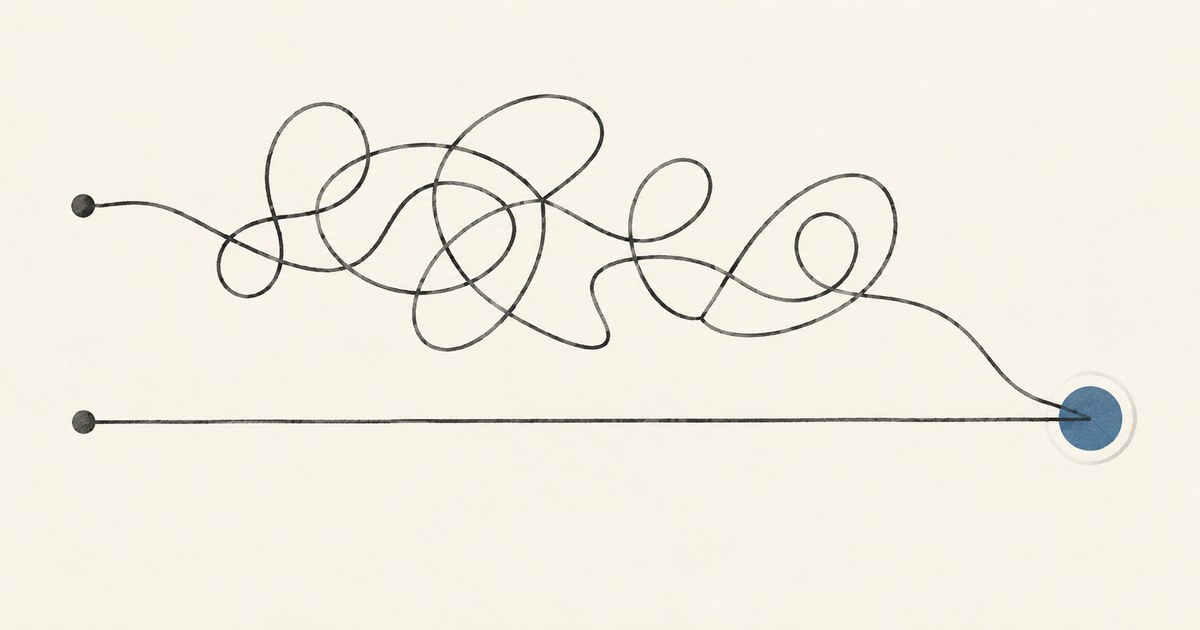
AI is changing how we measure expertise, effort and professional value. Less labor doesn't necessarily mean less valuable work.
Lately, my LinkedIn feed has been full of AI-detection talk.
Was this written by AI? Was that image generated? Did this person actually research it themselves? Did someone really write every word?
There's a strange amount of energy going into determining not whether something is good, useful, accurate, or insightful, but whether it was sufficiently difficult to produce.
I'm beginning to wonder if that tells us something about our relationship with work.
For a long time, effort has been one of our chief signals of value. If someone spent three days on a report, we assume it's more substantial. If a designer spent twenty hours on something, we credit it with more craftsmanship. If someone writes a thoughtful 2,000-word article, we assume real time went into thinking, researching, drafting, and editing.
Effort became intertwined with expertise. Usually, that made sense.
But AI is starting to break that relationship. Today, someone with deep expertise can use AI to explore ideas, organize research, challenge assumptions, and produce a first draft dramatically faster than a few years ago. Something that once took six hours might now take ninety minutes.
The obvious question: is the work now worth less?
I'm not sure it is. If an experienced strategist reaches a better conclusion in one hour with AI than they previously reached in six without it, the value may have increased. Production cost went down. The quality of the thinking didn't necessarily go with it.
In that sense, AI may not be devaluing expertise so much as separating expertise from effort.
Yet much of the conversation around AI assumes the opposite. We keep hearing some version of:
"I wrote this myself." "No AI was used." "This was created by a real person."
Those statements are starting to function almost like certifications of authenticity.
Sometimes the distinction genuinely matters. If someone presents unverified AI-generated research as fact, that's a problem. If AI is impersonating someone's voice, or replacing original thought with generic output, that's a problem. If someone publishes information they don't understand and can't defend, that's a problem.
But those are questions of judgment, authorship, responsibility, and quality, not really questions about whether AI was involved. That distinction matters.
Because there's another possibility behind the resistance to AI: it's disrupting the signals we've traditionally used to recognize expertise.
A finished article used to demonstrate an ability to write. A sophisticated analysis demonstrated hours of research. A polished presentation demonstrated design skill. A working application demonstrated programming ability.
Those artifacts still matter. They just don't tell us as much anymore about how the work was produced. For knowledge workers, that's unsettling.
And the closer AI gets to producing the visible output of a profession, the more interesting the conversation becomes.
We naturally start asking what part of the work is uniquely ours.
Writers emphasize meaning and voice. Designers emphasize taste. Strategists emphasize judgment. Developers emphasize understanding the systems behind the code.
There is truth in all of those distinctions.
But there may also be a natural tendency to define human value around whatever the technology cannot yet easily reproduce.
That doesn't make those arguments cynical or dishonest. It may simply be what happens when a profession is forced to renegotiate where its value actually resides.
If AI can dramatically reduce the labor required to produce something, we have to get clearer about what the professional was actually being paid for.
Was the client paying for six hours, or the right answer? For someone to type the words, or for the twenty years of experience that let them recognize which words mattered? For the research process itself, or for someone capable of interpreting that research, challenging it, and deciding what to do next?
AI forces those questions into the open.
I think that's healthy, because the highest-value parts of knowledge work were probably never the mechanical parts anyway. They were judgment. Context. Taste. Experience. Curiosity. Accountability. Knowing which question to ask next. Recognizing when an answer is technically correct but practically useless. Understanding a client, an organization, a market, or a situation well enough to know when the obvious answer is wrong.
AI can support many of those processes. Using it doesn't mean those human capabilities disappeared. Sometimes it simply means the person had more time left for them.
This is why the obsession with AI detection feels backwards to me.
Imagine receiving an excellent strategic recommendation: well researched, carefully reasoned, specific to your organization, and effective.
Would learning that AI helped analyze the research suddenly make it worse?
If so, why?
Now imagine receiving a terrible strategy that someone proudly spent forty hours creating by hand.
Does the labor make it more valuable?
Of course not.
Yet emotionally, many of us still carry some version of this equation:
more effort = more deserving = more valuable
AI is challenging it.
That may be exactly why the reaction has become so intense. It isn't merely introducing a new tool. It's forcing us to reconsider what work is actually worth.
That doesn't mean effort is meaningless.
Craft matters. Practice matters. Learning to do something without assistance often builds the expertise needed to use assistance intelligently later. There are still situations where the process itself has value.
But we shouldn't mistake inefficiency for virtue.
We don't ask accountants to prove their competence by refusing spreadsheets. We don't expect architects to avoid CAD software because hand drafting demands more craftsmanship. We don't ask photographers to reject digital cameras because developing film required more work.
Eventually, technology absorbs part of the labor, and the profession moves upward.
The valuable skill changes.
AI may be doing the same thing to knowledge work.
So the question shouldn't be "Did you use AI?"
A better set of questions might be:
Did you understand the problem? Did you contribute original thinking? Did you exercise judgment? Did you verify what the technology produced? Can you explain and defend the result? And are you willing to be accountable for it?
If the answer is yes, I'm increasingly unsure why it should matter how many hours of manual labor went into it.
Maybe the next era of professional value won't belong to the people who worked the hardest.
It may belong to the people who thought most clearly.